
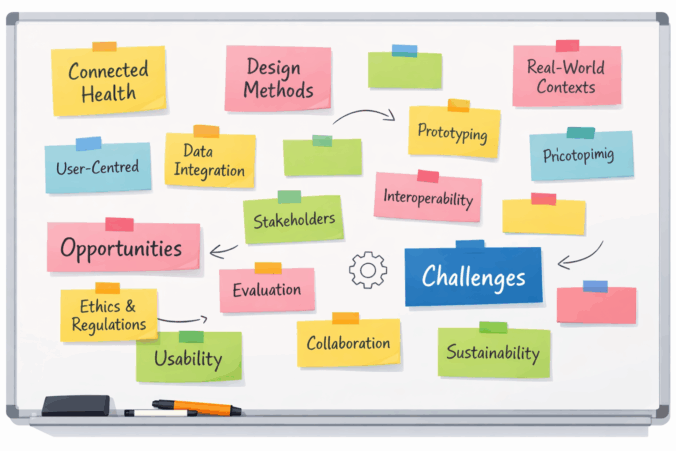
In 2024, we organized a workshop at NordiCHI on design methods in connected health. We had strong participation, and a wide range of connected health projects were presented and discussed. The workshop was structured to foster collaborative reflection on how different design approaches are used in real projects and what can be learned from them.
Following the workshop, we continued working with the material that emerged from the discussions and presentations. The submitted abstracts and workshop dialogues formed the basis for a joint paper, which has now been published in the Journal of Medical Internet Research.
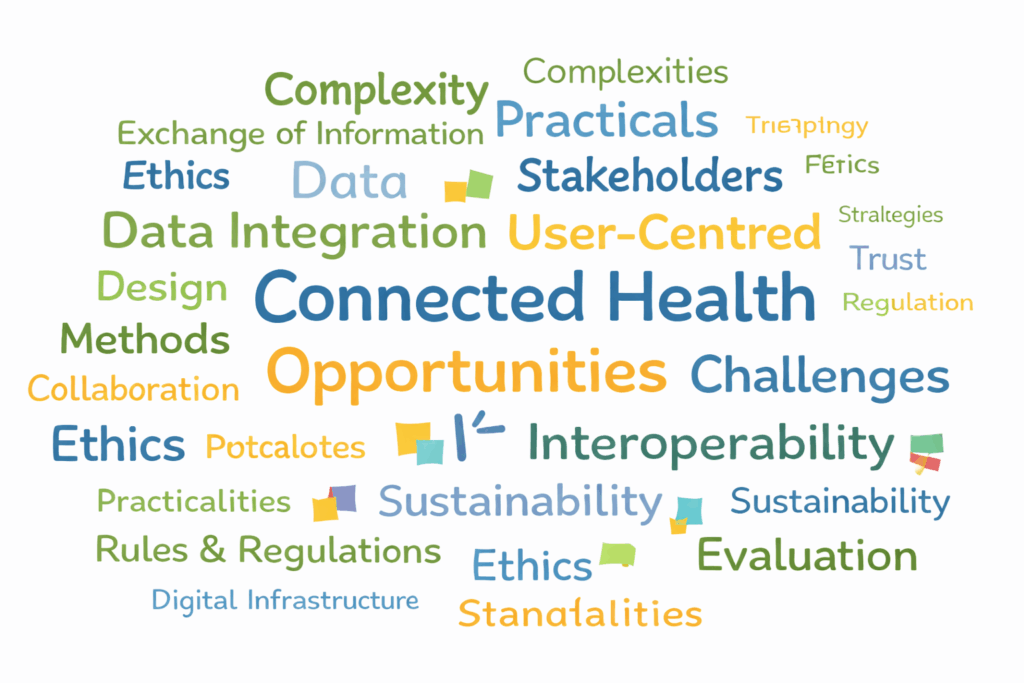
The paper synthesizes insights from six diverse connected health projects and highlights both opportunities and challenges experienced in designing connected health systems:
- On the opportunity side, it identifies areas such as improving data integration and usability, enhancing collaboration across stakeholders, using iterative and user-centered design processes, addressing complexity in socio-technical systems, focusing on sustainability, and adopting digital infrastructures that support seamless communication.
- At the same time, the paper also points out persistent challenges that practitioners face, including information exchange and interoperability, navigating ethical and legal requirements, understanding design and evaluation standards, ensuring trustworthiness and quality of data, and involving stakeholders effectively.
These insights come directly from workshop discussions and collective reflection across multiple projects. The paper brings together varied experiences to show what practitioners encounter when working with connected health systems in practice. This makes the findings relevant for researchers, designers, and policymakers interested in the practical side of digital health design.
The publication is timely because connected health technologies are becoming increasingly embedded in health care delivery and everyday care. Understanding both opportunities and barriers in their design — especially from real projects — helps ensure that these systems are usable, sustainable, and aligned with stakeholder needs.
We are pleased to see the workshop discussions evolve into a peer-reviewed publication, and we hope the paper is useful to others working on connected health design and implementation.
Blog post written by Shweta Premanandan