Month: March 2026

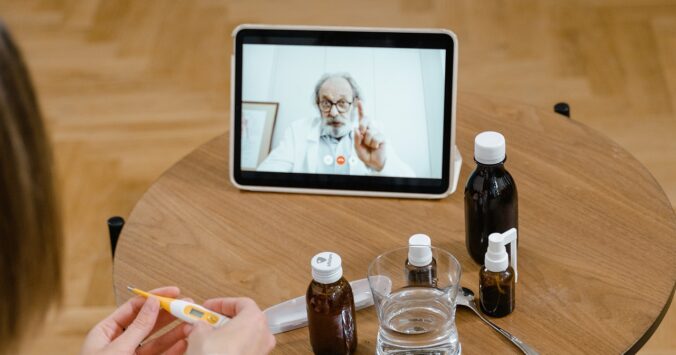
Vem använder videobesök i primärvården och varför?

I en ny studie undersöker Irene Muli, Åsa Cajander, Nadia Davoody, Lovisa Jäderlund Hagstedt, Helena Hvitfeldt, Maria Hägglund och Marina Taloyan hur patienter och vårdpersonal uppfattar videobesök i svensk primärvård, vilka patienter som faktiskt använder dem och vilka faktorer som påverkar användningen. Studien bygger på fokusgrupper med 27 vårdprofessionella och intervjuer med 13 patienter.

Ett av de mest intressanta resultaten är att införandet av videobesök beskrivs som snabbt, otydligt och delvis oförberett. Pandemin gjorde att tjänsten kom på plats fort, men det fanns inte tillräckligt med tid för en genomtänkt introduktion. Patienter fick information och instruktioner, men behövde ofta extra stöd för att faktiskt komma igång. Samtidigt hade vårdpersonalen begränsad utbildning och ibland även begränsad insyn i den patientnära tekniken, vilket gjorde det svårare att hjälpa patienter när problem uppstod.

Studien visar också att användning av videobesök inte bara handlar om teknisk tillgång, utan i hög grad om föreställningar om vem tjänsten passar för. Videobesök uppfattades ofta som något för yngre och digitalt vana patienter, medan äldre personer och patienter med språkrelaterade eller kognitiva hinder oftare sågs som icke-användare. Det är ett viktigt resultat eftersom det pekar på att användningen påverkas av antaganden och förväntningar, inte bara av faktiska behov eller medicinska förutsättningar.

En annan central poäng är att både patienter och vårdpersonal aktivt formar när videobesök används. Patienters önskemål, livssituation och möjlighet att ta sig till vårdcentralen spelade stor roll. För vissa var videobesök ett smidigt alternativ som sparade tid och förenklade kontakten med vården. För andra framstod fysiska besök eller telefonkontakt som mer naturliga. Vårdpersonalens egna bedömningar var också avgörande, särskilt eftersom det ofta saknades tydliga kliniska riktlinjer för när videobesök var lämpliga.

Det kanske mest tankeväckande resultatet är att videobesök riskerar att förstärka ojämlikheter om de införs utan tillräckligt stöd. Författarna visar att digital infrastruktur, plattformarnas användbarhet, ersättningssystem, organisatoriska förutsättningar och sociodemografiska skillnader påverkar användningen. När vårdpersonal och patienter gör antaganden om digital förmåga eller lämplighet finns en risk att vissa grupper aldrig riktigt får möjlighet att prova tjänsten. Studien pekar därför på att ett mer jämlikt införande kräver både bättre användbarhet, bättre stöd och större digital beredskap i vården.

Sammantaget ger studien en viktig bild av att videobesök inte kan förstås som enbart en teknisk lösning. Användningen formas i mötet mellan teknik, professionella bedömningar, patienters preferenser och de organisatoriska villkor som omger vården. Studien visar att frågan inte bara är om videobesök fungerar, utan för vem de fungerar, när de erbjuds och på vilka villkor.

Referens

Muli, I., Cajander, Å., Davoody, N., Jäderlund Hagstedt, L., Hvitfeldt, H., Hägglund, M., & Taloyan, M. (2026). Health Care Professionals’ and Patients’ Perceptions and Experiences of Who Uses Video Consultations, and Why: Qualitative Study. JMIR Human Factors, 13, e68658. https://humanfactors.jmir.org/2026/1/e68658
And then we have… COSMIC…

I’ve been diagnosed with an ‘ugly’ prostate cancer. It’s a simple, hard and unavoidable fact, and it is nothing to try to hide or escape from. So, there is nothing else to do than to take out the somewhat cynical perspective on life I’ve inherited from my father. I will therefore not delve into a sad story full of pitying and negativity. If I cannot change something, I can just as well observe what happens and learn from it. And then I can share my thoughts about everything that happens around me, as I will do in this post. Here I will describe my experiences as a combined patient and HMI researcher from the first of a sequence of in total twenty-nine days of two minute radiation treatments. And there will of course be one “conclusion” of my experiences at the end of the post (although, it might not be what you expected).

The treatment of prostate cancer has taken huge steps forward over the years, and I’m not as scared as I probably should have been fifteen or twenty years ago. “Cancer” is still a scary word, and we don’t talk about it in the same way as we talk about a flu or maybe more accurately about having a pneumonia. But I will try to look away from the scariness, and go into “observation mode”. And here is what I have observed:

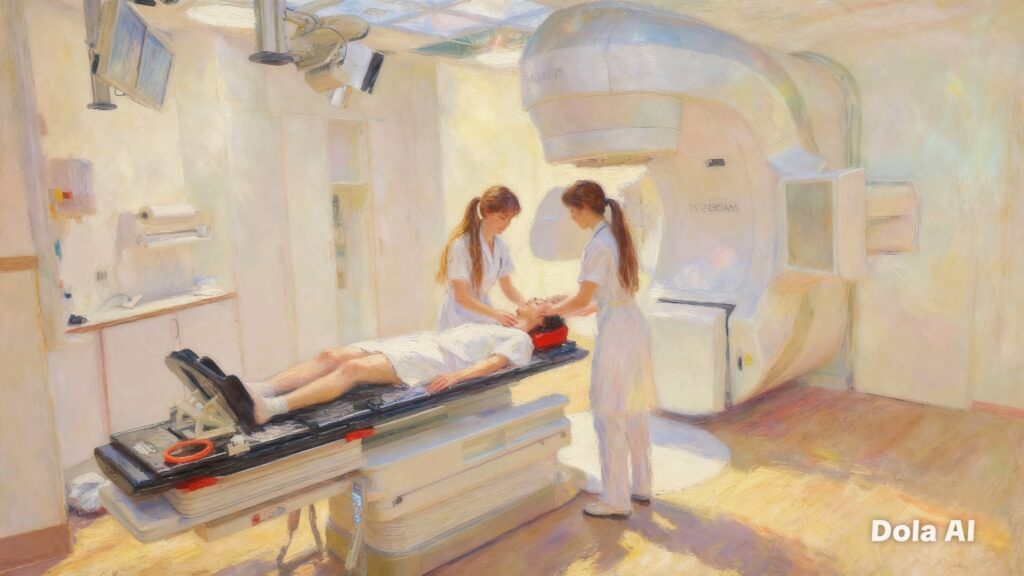
I enter a large bright room with soft music playing. First I remove my trousers and any electronic devices (for example, my smart clock). At the center of the room is a plastic monster, looking as if it came directly from the stage of Star Trek (see the picture below). The contraption holds a rotating radiation gun and an X-ray machine that work together to focus the radiation. The process uses X-ray triangulation of three gold grains, (actually miniature strips of gold leaf) that have been operated into my prostate, to make sure that the radiation beam is aimed correctly each time.

A painting of the room for radiation treatment with the “radiation gun” in the background (AI-generated picture by the author and Dola AI).

I am placed on a steel bed, with some ergonomic supports for my legs. With a number of laser beams, my three “tattoos” (small, and actually tattooed dots on my hips and tummy) are aligned with some positional markers. The bed is adjustable in many different degrees of freedom, to make it possible to reach the “perfect” position for the treatment. The nurses leave the room and the whole contraption with radiation head and X-ray machinery starts to rotate around my body, with short stops. making the final positional adjustments before the radiation is started. Finally it makes two full circles back and forth with a special, strange buzzing sound. I assume that that is the radiation phase.

And I don’t feel anything at all. The huge machine in the picture focuses the intense beam to precisely hit the small ‘dot’, smaller than a pea, that is the main character in this drama. The beam goes through a 360° rotation around me on the bed. It’s a very narrow but strong beam, invisible, but not at all harmless. And … I feel absolutely nothing. After approximately two minutes of buzzing and the continuous rotation of the radiation head, I’m ready to get up and go home again. No pain, no itch, no feeling of heat. But two minutes of high-energy photons (or electrons?) have made their impression on my non-wanted part of the body.

But as I lie there on the bed, I immediately start to think about the amazing computer system that handles this process from beginning to end. All the preparatory X-rays, alignments, calculations, and the careful dosages given by the machine are (of course) all handled by computers. And, I hasten to add, by the professional team they serve. It is even really mindboggling to think about the creation of  the complete system of Human-Machine Interaction that allows for these (and many similar) tools to be used at hospitals all over the world.

But… it is also when I lie there, the machine buzzing and rotating that I get this very insisting thought that penetrates my thoughts:

AND THEN WE HAVE… COSMIC…

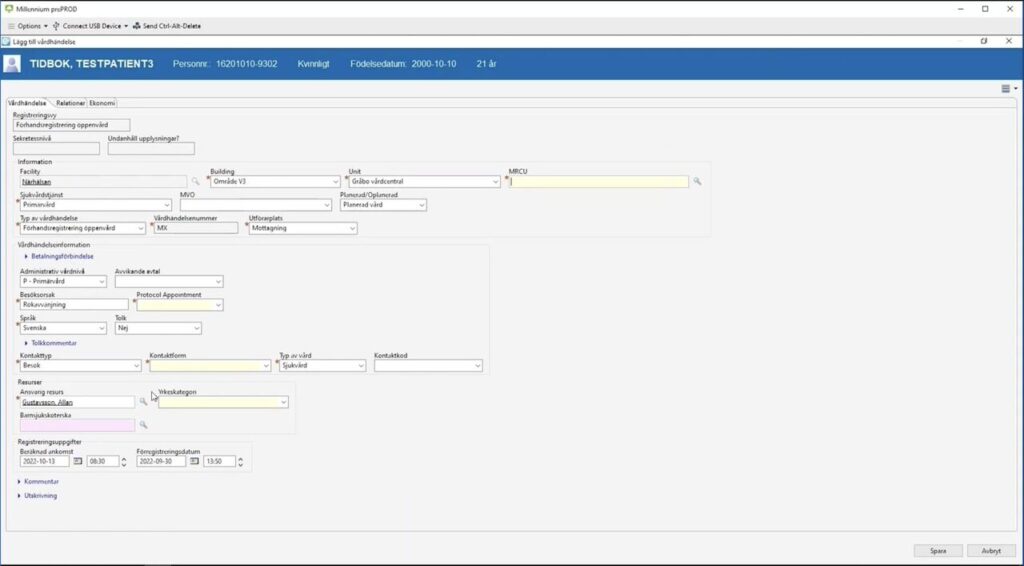
A real screenshot, actually from the Mil***nium system (I could not find any suitable screenshot from COSMIC.)

The contrast is on the brink to being hilarious, were it not that the topic is so serious and that people really have to work with COSMIC (I will not be so macabre, as to say… mi***nnium, but i guess you already thought about that?). Why, oh, WHY can we make such fantastic medical systems as the radiation treatment beamer, and then fail so miserably in making such an essential, “has-to-be” simple system for the storing of patient data?

WHY? OH, WHY?

POST SCRIPTUM: I have to give my full praise to the personnel on the clinics for radiation treatment and urology, who have been so wonderful and supportive in this difficult situation. Always happy and personal, providing a very large feeling of safety and comfort. Thank you, and I wish you could have a more friendly system than COSMIC at your workplace.

Reference group meeting in the AROA project

Last week, Jessica, Åsa and I hosted a productive reference group meeting in the AROA project funded by AFA Försäkring. As we mentioned previously, we are currently in the project’s synthesis phase where we work towards a theoretical framework on the role of interactions with technology, such as AI, robotics, or automation, in influencing our work engagement. The framework is still a work in progress that we iterate and continue to ground in our empirical and theoretical findings on a regular basis. As such we are not able to present anything here yet but look forward to do so once it is ready for a wider audience.

During the reference group, we presented the current state of this framework to representatives from companies, unions and employer organisations as well as HCI researchers external to the project. Through this, the reference group provided invaluable insights and reflections on parallels to what was presented and helped further ground the current iteration of the project in their practical and domain knowledge. The project group also got feedback and inspiration from the reference group on where the project should go next and on future possibilities on how to continue after the current project finishes up. To the project group, a big thank you for your support in the project so far and the great insights that you provided!

The project team will now continue to work on integrating the knowledge and feedback gained from the reference group into the next state of the theoretical framework on digital work engagement. We will share further updates when we are ready to do so as the project continues.

Thank you for reading this!

Andreas and the other researchers in the AROA project.

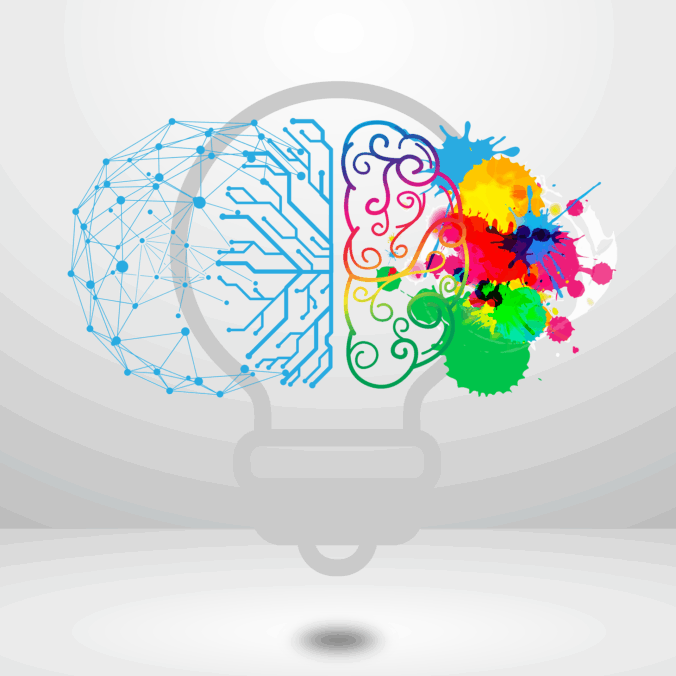
Rethinking Key Concepts in the Age of AI

As artificial intelligence becomes more common in education and society, some of the concepts we rely on need to be reconsidered. In the paper Conceptual Analysis and Conceptual Engineering: Methodological Issues in the Philosophy of Computing Education, Roger McDermott, Mats Daniels, John N. Brown, and Åsa Cajander discuss how philosophical methods can help researchers analyse and rethink key concepts in computing education (McDermott, Daniels, Brown, & Cajander, 2025).

The authors focus on two approaches. Conceptual analysis helps clarify what a concept actually means. For example, analysing the concept of a programming language shows that it includes elements such as syntax, meaning, data structures, and mechanisms for abstraction. Making these elements explicit helps researchers and educators better understand the foundations of computing.

However, sometimes clarification is not enough. When technology changes, concepts may also need to change. This is where conceptual engineering becomes useful. Instead of only analysing concepts, it explores whether they should be revised or redesigned.

The paper uses the concept of explanation as an example. Modern AI systems often work as complex models that are difficult to interpret. This makes it challenging to explain how a decision was reached. In areas such as education and public administration, where transparency and accountability are important, this creates new challenges.

Roger McDermott, Mats Daniels, John N. Brown, and Åsa Cajander therefore explore possible ways of rethinking explanation in AI contexts. These may include approximate explanations of influential factors, contrastive explanations that show how a decision could have been different, and institutional mechanisms such as audits that support accountability.

Together, conceptual analysis and conceptual engineering provide useful tools for understanding and adapting key ideas in computing education as technologies such as AI continue to develop.

Reference

McDermott, R., Daniels, M., Brown, J. N., & Cajander, Å. (2025, November). Conceptual Analysis and Conceptual Engineering: Methodological Issues in the Philosophy of Computing Education. In 2025 IEEE Frontiers in Education Conference (FIE) (pp. 1–9). IEEE.

Nailing My PhD Thesis

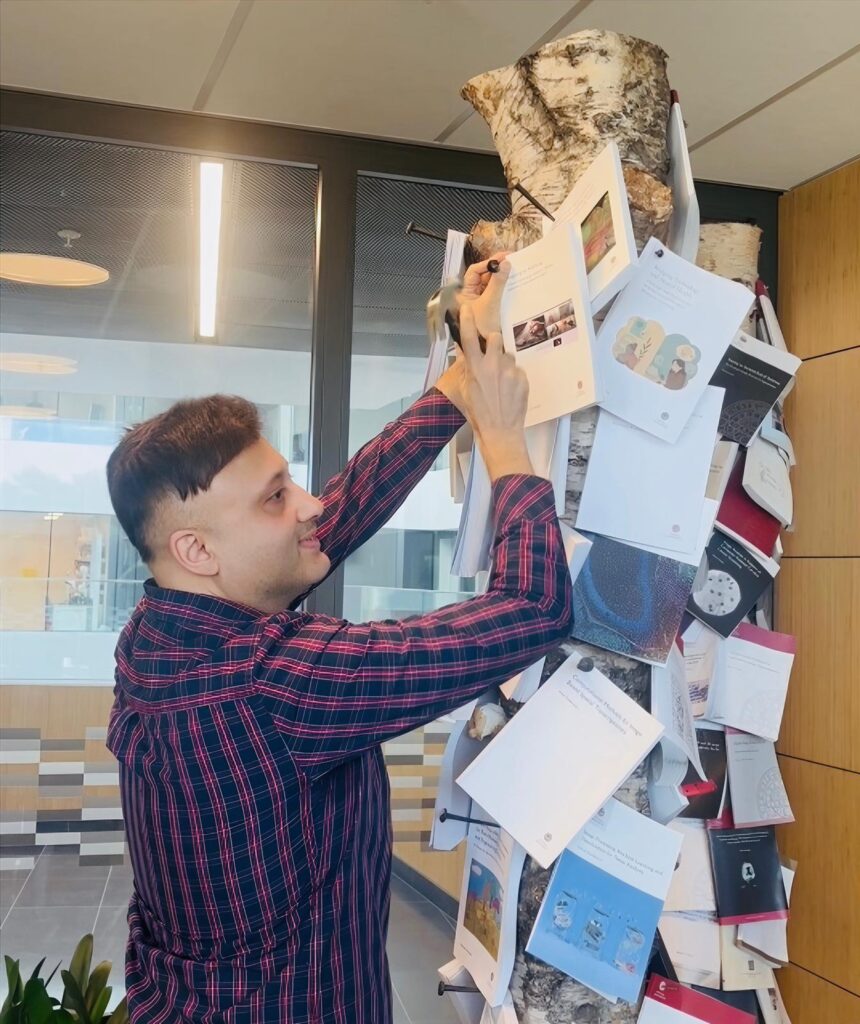
Surrounded by colleagues, friends, and family, I nailed my PhD thesis to the tree in our department yesterday. It was a simple act, but it represented years of hard work, challenges, and growth. In Scandinavia, this tradition marks the moment when the thesis becomes public, and the journey towards the defence enters its final stage. For me, it felt both grounding and uplifting.

My research focused on developing a user-friendly web-based application, Carer eSupport, designed to support informal caregivers of individuals with head and neck cancer. In Sweden, as in many other countries, cancer care has gradually shifted from hospitals to the home. Family members now carry much of the daily responsibility. These informal caregivers often step into complex roles with a little preparation. They manage medical tasks, emotional pressure, and practical coordination frequently while being excluded from healthcare processes.

This thesis provides guidelines for developing and evaluating web-based applications that support the well-being of informal caregivers. It also identifies factors that influence the acceptance and use of such applications. At its core, this work recognises caregivers as essential partners in cancer care and argues that they should not be left to manage their issues on their own.

The thesis further explores how technology can be designed to be accessible, understandable, and meaningful for vulnerable groups such as caregivers. Many caregivers have limited time, reduced energy, and varying levels of digital confidence. Designing for them requires clarity, simplicity, trust, and sensitivity to their emotional situation. A web-based application should not introduce additional complexity. Instead, it should fit into everyday life, strengthen preparedness for caregiving, and support both practical tasks and psychological needs.

Through a human-centred design and in close collaboration with caregivers and healthcare professionals, Carer eSupport was developed as an evidence-based digital intervention. The application aims not only to provide reliable information but also to support competence, autonomy, and a sense of connection. In doing so, it contributes to a broader understanding of how web-based applications can be designed to promote well-being in demanding and emotionally challenging life situations.

Looking back, this journey has been demanding, but deeply meaningful. I have learned that designing technology is not only about functionality. It is about listening carefully, understanding lived experiences, and creating something that makes daily life slightly more manageable for someone carrying heavy responsibilities.

My heartfelt thanks to everyone who made this possible. I feel deeply grateful, especially to my main supervisor, Professor Åsa Cajander, who guided me with clarity, patience, and trust throughout this journey.

Defence: March 27, 2026, at 13:15
Place: 101195, Heinz-Otto Kreiss, Ångström, Lägerhyddsvägen 1, Uppsala

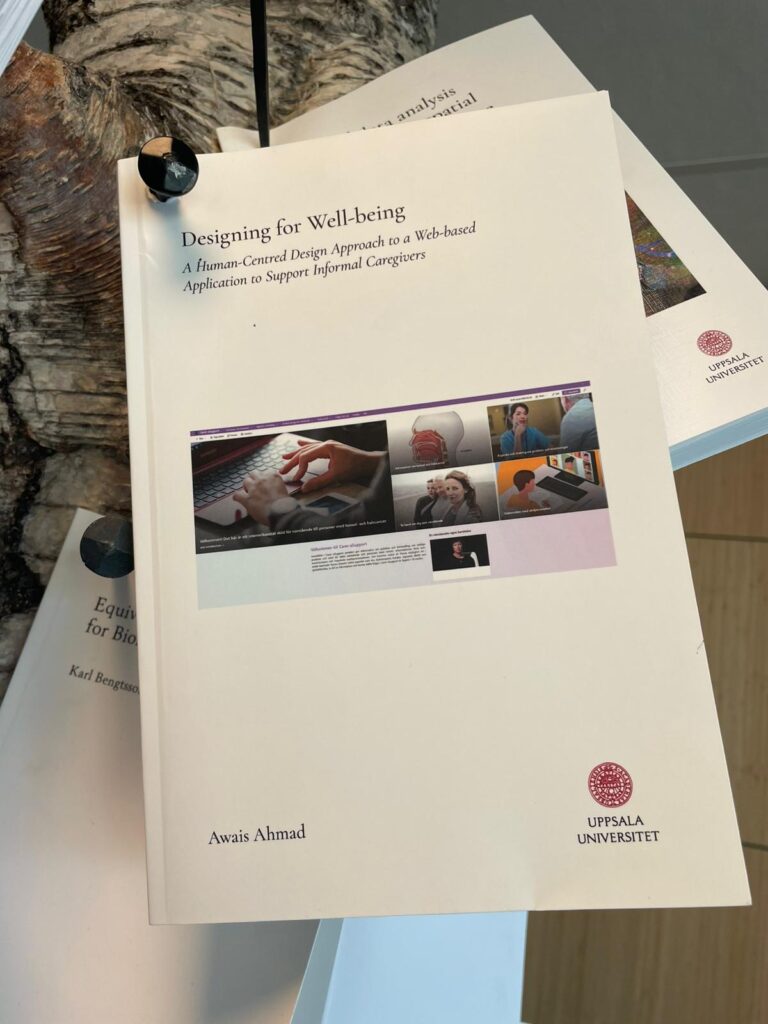
Thesis title: Designing for Well-being: A Human-Centred Design Approach to a Web-Based Application to Support Informal Caregivers
Download the thesis: https://uu.diva portal.org/smash/record.jsf?pid=diva2%3A2035324&dswid=4310

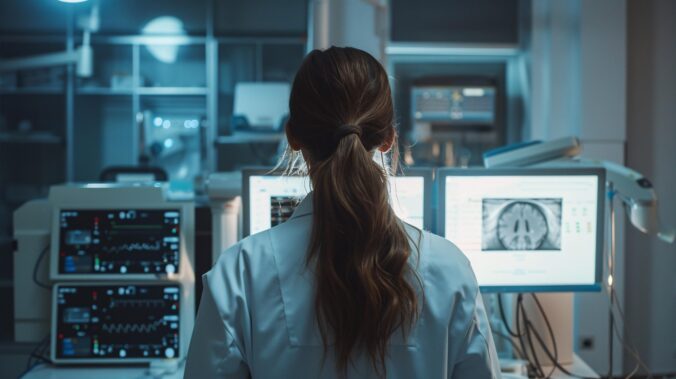
Hot och trakasserier i digital vård – möt Sofia Thunberg, ny postdoktor i DIGI-RISK

Digital vård växer snabbt. Samtidigt förändras arbetsmiljön för vårdpersonal, och en fråga som fått allt mer uppmärksamhet är hot och trakasserier i digitala vårdmöten.

I forskningsprojektet DIGI-RISK studerar vi hur sådana risker uppstår och hur de kan förebyggas. Nyligen började Sofia Thunberg som postdoktor i projektet. Vi ställde några frågor för att lära känna henne och höra mer om hennes arbete.

Kan du kort presentera dig själv och din forskningsbakgrund?

Jag är doktor i kognitionsvetenskap och har en bakgrund inom människa-datorinteraktion med särskilt fokus på ny teknik i olika vårdsammanhang. Bland annat har jag forskat kring införandet av välfärdsteknik inom äldrevården, sociala robotar som psykosocialt stöd för äldre med demens på omsorgsboenden och barn med autism inom specialisttandvården, användningen av generativ AI inom primärvården samt medicintransporter med drönare. Något jag tidigt intresserade mig för var hur vårdpersonalen påverkas i sitt arbete av att ny teknik införs och jag har bland annat tittat på förekomsten av technostress.

Vad gjorde att du ville arbeta i DIGI-RISK-projektet?

Hot och trakasserier inom vården är ett stort och välkänt arbetsmiljöproblem som möjliggörs på ett nytt sätt via den digitala tekniken. Användningen av digitala vårdmöten är idag utbredd medan forskningen kring dess konsekvenser på arbetsmiljön ligger efter. Jag tycker det är spännande med ett projekt som undersöker ett sådant nytt forskningsområde och som också är väldigt relevant ur ett svenskt perspektiv.

Vad kommer du främst att arbeta med i projektet?

Mitt huvudfokus ligger på att utforma en nationell enkät där ett delmål är att validera ett nytt enkätinstrument för att mäta förekomsten och intensiteten av hot och trakasserier i digitala vårdmöten. 

Vad hoppas du att forskningen ska bidra med framöver?

Jag hoppas att projektet kommer leda till ett ökat fokus på vikten av ett aktivt arbetsmiljöarbete för användningen av digitala vårdmöten och att vårdanställda kan känna sig tryggare på sin arbetsplats. 

    Hur påverkar upphandling av AI arbetsmiljön i vården?

    Under våren samlades två referensgrupper med personer från vård, upphandling, arbetsmiljöarbete och leverantörssidan för att diskutera erfarenheter av AI och digitala system i hälso- och sjukvården. Samtalen är en del av ett nordiskt forskningsprojekt som undersöker hur upphandling av AI-system kan genomföras med ett tydligare arbetsmiljöfokus.

    En central fråga i diskussionerna var vilka aktörer som behöver vara involverade när AI upphandlas. Deltagarna lyfte bland annat upphandlingsledare, verksamhetsutvecklare, vårdprofessioner, fackliga organisationer, arbetsmiljöfunktioner och leverantörer. Flera betonade att många roller påverkas av upphandlingar, men att de sällan möts i ett gemensamt samtal om konsekvenserna för arbetet.

    Samtalen synliggjorde också flera utmaningar i mötet mellan offentlig upphandling, AI och arbetsmiljö. Deltagarna beskrev hur AI ibland upphandlas med höga förväntningar på vad tekniken kan lösa, samtidigt som det är oklart hur systemen faktiskt kommer att påverka arbetet i praktiken. Det kan vara svårt att formulera krav på användbarhet och arbetsmiljö i upphandlingsprocessen, och arbetsmiljöperspektivet kommer ofta in sent i processen.

    En annan återkommande fråga handlade om transparens och förståelse för hur AI-system fungerar. För att AI ska kunna stödja arbetet behöver det gå att förstå hur systemen påverkar beslut, arbetsbelastning och ansvar i vardagen.

    Diskussionerna visade också att upphandling av AI inte bara är en teknisk eller juridisk process. Den innebär ofta en bred organisatorisk förändring som påverkar arbetssätt, ansvarsfördelning och professionellt handlingsutrymme i vården.

    Insikterna från referensgrupperna används nu i AI-PROCARE-projektets fortsatta arbete med att utveckla kunskap och rekommendationer för hur arbetsmiljöperspektiv kan integreras tidigt i upphandling av AI-system i hälso- och sjukvården.