Informal caregivers (ICs) play a vital role in supporting individuals with head and neck cancer. However, they are often expected to manage complex medical, emotional, and practical responsibilities with limited preparation. This gap between expectations and available support highlights a clear need for interventions that go beyond providing information and instead actively strengthen caregivers’ well-being and sense of preparedness.
In our recent study, co-authored by Awais Ahmad, Åsa Cajander, Ulrica Langegård, Birgitta Johansson, Anna Henriksson, Mona Pettersson, Waqas Ahmad, and Ylva Tiblom Ehrsson, and published in JMIR Human Factors, we address this challenge through the development of Carer eSupport. This web-based application was designed using a human-centred design (HCD) approach.
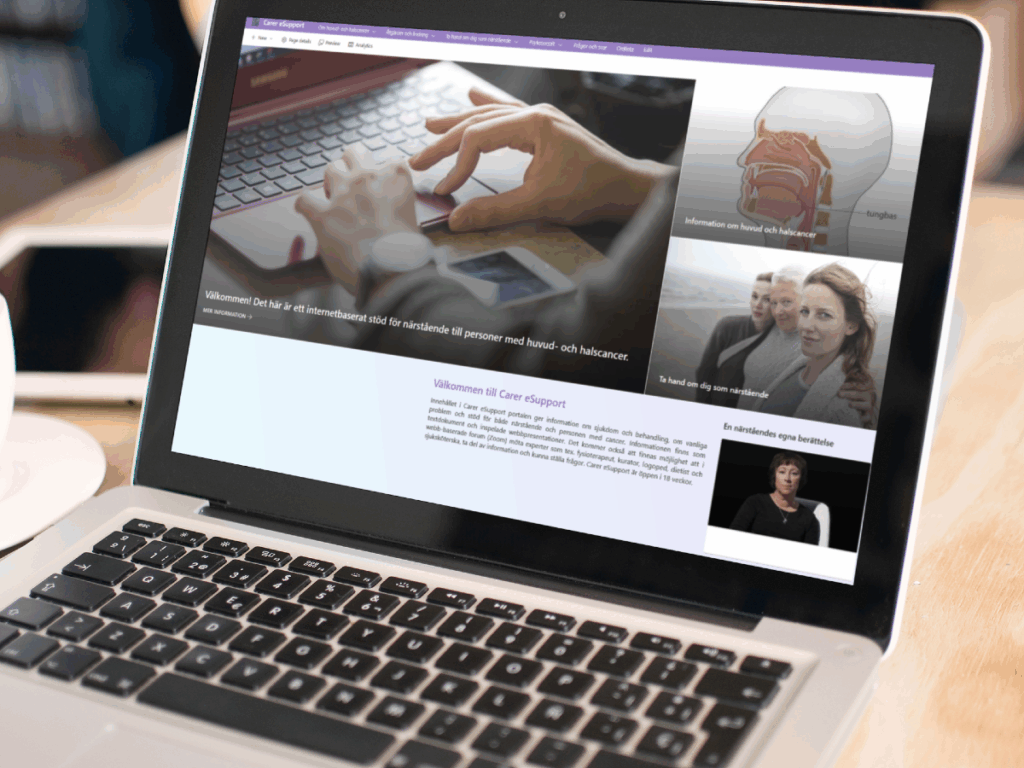
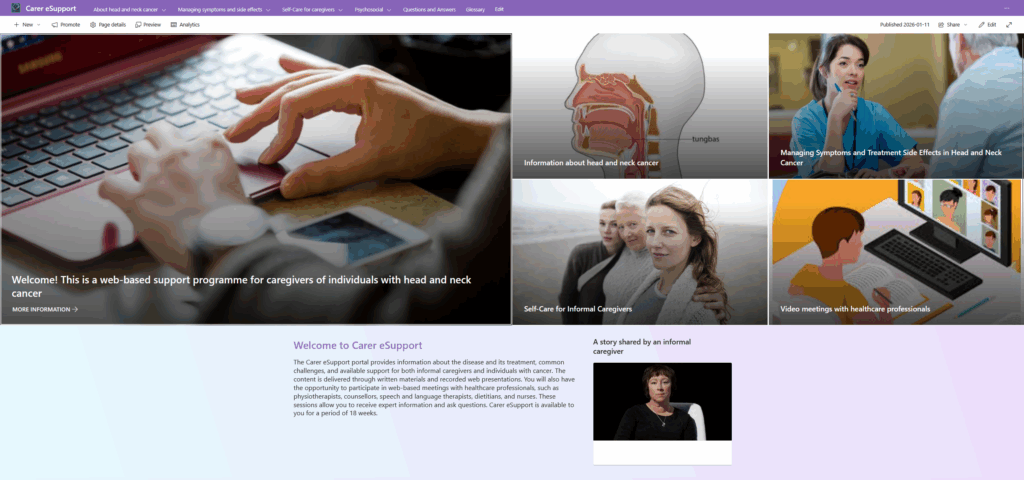
The aim of the study was to present how a web-based application can be designed to support ICs’ well-being and preparedness for caregiving through the HCD process. We detail the design and functionalities of the Carer eSupport application and explain how it responds to both the functional and psychological needs of ICs. By integrating HCD with a eudaimonic perspective, our research also intends to provide insights into design approaches that prioritise user well-being in web-based application development.
Additionally, we reported findings from our pilot study and highlighted the initial challenges ICs faced when engaging with the application and the strategies used to overcome these issues.
Moving Beyond Functionality: Designing for Real Needs
We applied the HCD process not only to improve usability, but also to address both the functional and psychological needs of ICs. The design process actively involved ICs, healthcare professionals (HCPs) and researchers across three iterative cycles.
This approach ensured that the application reflects the realities of caregiving. For example, Carer eSupport integrates:
- Educational resources to improve preparedness for caregiving tasks
- Practical guidance on symptom management and daily care challenges
- Self-care support addressing fatigue, stress, and emotional strain
- Psychosocial features such as discussion forums and interaction with HCPs
Integrating Well-Being into Design
One of the study’s main contributions is the integration of a eudaimonic perspective into the design of well-being. Rather than focusing solely on short-term satisfaction, the intervention addresses deeper psychological needs, including autonomy, competence, and relatedness. This approach is grounded in eudaimonic well-being, which emphasises living in a way that is meaningful, purposeful, and aligned with one’s values.
Eudaimonic motivation differs from hedonic motivation in that it does not primarily focus on pleasure or comfort. Instead, it emphasises personal growth, meaning, and the realisation of one’s potential. In the context of caregiving, this distinction is particularly relevant. ICs are not only seeking ease of use but are also navigating emotionally demanding situations where purpose, mastery, and connection are central to their experience.
This is where Self-Determination Theory provides a useful theoretical foundation. It proposes that sustained and meaningful motivation is supported by three basic psychological needs:
- Autonomy: feeling in control of one’s actions and decisions
- Competence: feeling capable and effective in managing tasks
- Relatedness: feeling connected to others and supported
The Carer eSupport application operationalises these principles in its design. Autonomy is supported by allowing ICs to navigate content according to their own needs and pace. Competence is strengthened through tailored educational materials and practical guidance. Relatedness is fostered through communication features that connect ICs with healthcare professionals (HCPs) and, where relevant, peers in similar situations.
Importantly, these design choices go beyond improving usability. They support a deeper form of engagement in which ICs are enabled to develop confidence, resilience, and a stronger sense of meaning in their caregiving role. This reflects the core idea of eudaimonic motivation: engagement driven by intrinsic value and personal significance rather than short-term satisfaction.
Evidence from the Pilot Study
The paper further strengthens its contribution by reporting findings from a pilot study, demonstrating the feasibility of the intervention. The results show encouraging engagement, including a strong consent rate and successful user onboarding, confirming readiness for a larger trial.
At the same time, the study does not overlook challenges. ICs faced several barriers when engaging with the application:
Demanding Nature of Caregiving
Due to their caregiving responsibilities, many ICs struggled to find time and energy to engage with the application. During the early phase of diagnosis and treatment, caregiving demands often took priority. In this context, follow-up reminders supported re-engagement once their situations stabilised. One participant noted that although they initially could not log in, a later reminder enabled access when their circumstances improved.
Communication Problems
Some ICs did not receive the initial email with login details or found it in their spam folder, delaying access. To address this, we implemented a multichannel communication strategy using email, SMS, and follow-up phone calls. This improved access speed and strengthened user support.
Login and Authentication Problems
As Carer eSupport is built on Microsoft SharePoint, some users experienced authentication conflicts, particularly when multiple Microsoft accounts were involved. The two-factor authentication process was also perceived as complex. We responded by improving written instructions and developing a step-by-step video tutorial, which reduced login errors and improved independent access.
Access to IT Infrastructure
Some ICs lacked access to suitable devices and relied on smartphones or shared computers, which sometimes limited functionality. As hardware provision was not feasible, we provided extended telephone support. While this enabled eventual access, results suggest that access would be smoother with more consistent use of computers or tablets.
Limited IT Knowledge
Limited digital literacy, particularly among older ICs, also affected onboarding. To address this, we provided structured telephone guidance and clear instructional materials to support the login process and initial use of the system.
Why This Matters
This work provides a compelling example of how HCD can be applied in a structured and meaningful way to design for well-being. It shows that:
- Supporting ICs requires more than information; it requires addressing emotional and psychological needs
- Iterative, participatory design leads to more relevant and usable interventions
- Real-world challenges must be integrated into the design process, not treated as external issues
Most importantly, the study demonstrates that the aim is not only theoretical but achieved in practice: Carer eSupport represents a functioning, user-informed system that supports both preparedness and well-being.
Looking Ahead
While the pilot study confirms feasibility, the ongoing randomised controlled trial will provide further evidence of effectiveness. Nevertheless, this work already offers valuable insights for researchers and designers working at the intersection of HCI, healthcare, and well-being.
It supports a broader shift in digital health design: from systems that primarily deliver information to systems that actively support people in complex and emotionally demanding roles.
Learn more: The full details of our study, including all data and design insights, are published open-access in JMIR Human Factors. Read the paper here: humanfactors.jmir.org/2026/1/e81896.