
In a new paper, Andreas Bergqvist, Niklas Humble, Mats Daniels, and Åsa Cajander investigates how AI influences work engagement among IT professionals in the Swedish IT-sector. 28 qualitative interviews were studied through the job demands resource model. The findings show how emerging technologies such AI can contextually affect both resources and demands in the work practices and workplaces at the same time. On one end it can reduce repetitive tasks, support learning, and highlight meaningfulness of work, while, on the other, it can lead to cognitive overload and concerns about reliability and skill relevance. These findings suggest that the job demands resource model is insufficient to fully account for the dynamic nature of how digital technologies co-constitute work practices contextually through mediated interactions as part of a socio-technical system. This highlights the need to adapt the conceptualization of work engagement to handle the nuanced ways that both direct and indirect interactions with technologies shapes our practice and work. Framed through the need for theories on UX@work, we call this Digital Work Engagement, a positive and fulfilling user experience of vigour, dedication, and absorption based on the worker’s interactions with and relation to technology in the workplace. Based on this, the paper includes implications for how both managers and designers can continue to foster work engagement through how they develop and integrate emerging technologies with respect for professional growth, autonomy, and support.
We gratefully acknowledge that the study and research project was supported by funding from Afa Försäkringar, Sweden [grant number 220244].
If this sounds interesting to you, you can read the full paper by following this link.
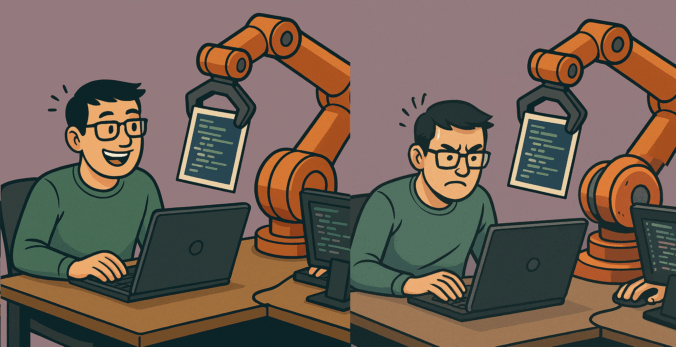
As a parallel, the image at the start of this post is AI-generated, or at least partially. I thought I could get it generated ready to post directly. But after sitting an hour prompting, I had a chat of failed attempts. The face changed between the image, the robot got googly eyes or stopped holding anything, and computer screens got flipped the wrong way. In the end, I took my favorite parts of different attempts and cut and pasted them together to fit what I intended. It became self-induced workslop. Next time I will probably just browse for a creative commons photo that sort of fits instead. So in a way, similarly to what you can read in the paper, the AI was simultaneously useful to me and induced more work and frustration.