This new method addresses a crucial challenge in the fast-evolving world of mobile health (mHealth)—evaluating usability and persuasiveness in a way that aligns with agile development processes.
Published in the Health Informatics Journal, this study presents a usability evaluation method tailored for persuasive mHealth applications. Whether designed for caregivers or other health-related purposes, HealthCheck helps ensure these applications are user-friendly, effective, and engaging.
What is HealthCheck?
HealthCheck is a usability evaluation framework tailored to meet the challenges of developing persuasive mHealth applications in agile environments. Unlike traditional methods that may be resource-intensive or slow to provide feedback, HealthCheck delivers quick, actionable insights that help developers iteratively refine their applications.
What is HealthCheck About?
The method integrates established usability heuristics with principles of persuasive system design to evaluate critical aspects such as:
User Engagement: Ensuring that apps effectively motivate and sustain user interaction.
Personalization: Assessing how well apps adapt to individual user needs.
Usability in Agile Contexts: Supporting iterative development cycles with timely feedback.
HealthCheck also emphasizes the unique needs of informal caregivers, who often rely on such tools to manage complex caregiving tasks while balancing their own well-being.
How was HealthCheck Developed?
HealthCheck was developed using a rigorous Design Science Research (DSR) methodology. This process included:
Problem Identification: Recognizing the need for a usability evaluation method suited to persuasive mHealth apps in agile contexts.
Solution Design: Combining insights from existing usability and persuasive system heuristics.
Implementation: Testing the method using a prototype app (AnhörigCare) designed to support informal caregivers in Sweden.
Evaluation: Engaging seven experts in usability, UX, and eHealth to assess the method’s effectiveness.
Reflection and Improvement: Refining the method based on expert feedback to enhance its practicality and relevance.
Tested on AnhörigCare: eCoaching application for Informal Caregivers
To demonstrate its practical application, HealthCheck was tested with AnhörigCare, an e-coaching app designed for informal caregivers in Sweden. This case study showed how HealthCheck could identify areas for improvement, such as streamlining navigation, tailoring content, and enhancing user feedback, making the app more supportive and user-friendly. This test case underscores the method’s adaptability and value for a wide range of mHealth applications, beyond caregiving.
Key Insights from the Paper
Effective Heuristics: The HealthCheck framework includes a set of heuristics tailored for persuasive mHealth applications, such as ensuring clear feedback mechanisms, privacy protection, and user education.
Expert Validation: Feedback from usability experts demonstrated the method’s ability to identify and prioritize usability issues in a structured and efficient way.
Iterative Feedback: HealthCheck’s design supports agile development by enabling rapid cycles of evaluation and refinement.
Why does HealthCheck Matter?
The usability of mHealth applications is pivotal to their success, especially for informal caregivers who often juggle demanding responsibilities. HealthCheck offers a structured yet flexible way to ensure these applications are user-friendly, engaging, and effective in meeting their goals. By providing tailored feedback and highlighting actionable areas for improvement, the method helps developers create tools that truly make a difference.
What’s Next?
We hope HealthCheck will become a valuable tool for researchers, developers, and designers working on persuasive mHealth applications. We’d love to hear your thoughts and how you envision using HealthCheck in your projects!
Let us know in the comments or reach out directly.
On November 5th, the TARA Project held its second reference group meeting online via Microsoft Teams. The meeting brought together participants from across the aviation industry to share updates and exchange ideas about the project’s progress.
For those unfamiliar, the TARA Project is a three-year collaboration between Uppsala University and TYA, funded by AFA Insurance. It focuses on exploring how automation, digital tools, and AI can be introduced into aviation while ensuring a safe and healthy work environment. The ultimate goal is to create practical methods that the industry can use when adopting new technologies.
Key Topics Discussed
The meeting agenda covered several important areas:
Stakeholder Study The team shared insights from interviews with various stakeholders about the challenges and opportunities of implementing new technologies in airport operations. Discussions highlighted the importance of balancing safety, efficiency, and collaboration to ensure that these changes benefit everyone involved.
Ground Staff Study Updates on this study focused on how new tools and systems are shaping the daily work of ground-handling staff. While new technologies can improve processes, they also come with challenges that need to be addressed to support workers effectively.
Encouraging Participation in Surveys With an upcoming survey as part of the project, participants shared strategies for increasing response rates. Engaging with the industry and making the process straightforward for participants were some key takeaways.
Looking at Global Trends The group explored trends in aviation technology and discussed what they might mean for the industry, from automation to sustainability. These conversations emphasized the importance of preparing for the future while keeping workplace well-being a top priority.
What’s Next?
This meeting showcased the value of open dialogue and collaboration in tackling the challenges of technology adoption in aviation. By bringing together diverse perspectives, the TARA Project aims to create tools and methods that ensure both safe and efficient integration of new technologies.
A big thank you to everyone who joined and contributed to these important discussions. We’re excited to keep building on this work and seeing where it takes us!
As Västra Götalandsregionen (VGR) embarks on the ambitious Millennium EHR project, it’s crucial to draw lessons from past large-scale implementations. A study by Morten Hertzum, Gunnar Ellingsen, and Åsa Cajander provides invaluable insights into the challenges and outcomes of introducing the Epic electronic health record (EHR) system in Denmark and Finland. This study holds significant relevance for VGR’s journey, especially given the concerns raised about Millennium’s implementation, as highlighted in this interview.
The Nordic Experience with Epic
The study focuses on two large-scale Epic implementations:
Denmark: The system went live in 2016–2017 across 12 hospitals serving 2.6 million citizens.
Finland: Starting in 2018, Epic was rolled out in the Helsinki-Uusimaa region, integrating healthcare and social care for 1.7 million people.
Despite extensive preparation, both implementations faced persistent challenges, including usability issues, productivity dips, and unmet expectations. Five years post-implementation, 32% of Danish users remained dissatisfied, while only 9.3% of Finnish physicians felt the system improved care quality.
Key Takeaways for the Millennium Implementation
Unmet Expectations: Both Danish and Finnish projects suffered from a gap between high pre-implementation hopes and post-implementation realities. The study emphasizes the importance of realistic goal-setting and proactive issue resolution.
Usability Matters: Poor interface design, unclear terminology, and excessive clicks plagued users, leading to frustration. These issues were often exacerbated by attempts to fit a U.S.-centric system into a Nordic healthcare model.
Long-Term Adaptation: Initial productivity dips lasted longer than anticipated, and resolving system issues required years, not months. Planning for extended adaptation is critical.
Workload Redistribution: Shifting documentation tasks to physicians without adequate support led to dissatisfaction. Any similar changes in Millennium need careful consideration.
Localized Customization: Balancing regional standardization with local needs is complex. Both Denmark and Finland struggled to find the right mix, leading to discontent among users.
The study underscores the importance of learning from past implementations to avoid repeating mistakes. These large implementation project must prioritize usability, realistic planning, and user-centered design to succeed where others have struggled. Transparent communication and adaptive strategies will be vital in navigating the complexities of a project of this scale.
Jonathan Källbäcker and I attended the Applied Human Factors and Ergonomics 2024 conference in Nice, France during the summer. The tasty seafood and baked goods found in the region aside, we were there to present a paper in the AROA-project. The conference was held at Campus St Jean at Université Côte d’Azur over four days and consisted of about 150 sessions of about five to seven presentations each split across 42 tracks and about 100 posters. Since it was not possible to attend all the sessions (I only got around to 12 of them), I chose to prioritize sessions related to work and AI.
Nice, France
This blog post consists of my pick of three highlights of the conference in the order of their sessions occurred, some issues with the conference format and how I would try to work around them if I organised a conference in the future, and a summary of the paper we presented on the conference. With a conference of this size, this will not be much more than a snapshot of it.
Highlights as an Attendee
During the session on Human factors in game design, Andrade (2024) presented on the placement of buttons in video game ads and the consequences of placing buttons outside of a handheld devices’ functional area. The functional area is often discussed as the space where buttons should be placed on handheld touch screens to make sure that they are reachable, but the design literature I have used in teaching rarely boggle down into the actual consequences of and reasons for placing buttons outside of it. The presentation discussed how this deliberate design choice makes the button hard to reach which increases the time needed to press the button and the duration of the ad that was viewed. It also causes a lot of strain and ads in free mobile games are common and often require multiple button presses. While the presentation was not related to AI or work, it was a highlight of the conference as it was an interesting and well-presented while contextualising and giving very practical and clear implications for a heavily discussed but maybe often-overlooked design principle.
The title of the session Individualization of services using Generative AI was a bit misleading as most presentations of the session were about the future of technology in some way. The session was packed with interesting topics, such as Grosch (2024) and Haase (2024) presented on future skills, Stübinger (2024) discussed how students would use generative AI in their work processes, Kröckel (2024) presented a literature review on how Generative AI can redefine emergency services, and Nhi et al. (2024) looked at awareness of environmental impact and willingness to reduce behaviours of video stream consumption. While the session overall gave a promising view of our adaption for the future, the presentation by Nhi et al. (2024) was one of the strongest presentations I attended as it conveyed its research gap and takeaway points very well, had a clear and visually interesting set of slides, while managing to portray their research in ways that anyone could understand.
Left: Stübinger (2024), Middle: Maibaum et al (2024), Right: Nhi et al. (2024)
The last highlight was the session Digital Dynamics in the Workplace, Exploring AI Integration, Flexible Work Models, and Participatory Design. The presenters were mainly from ifaa (it apparently translates to Institute for applied work science) in Germany and they were doing a lot of interesting research on work design and designing for work processes which turned out to be an interesting angle of approach compared to the workplace studies that we are doing in the research project I am in. The presentations included interesting things such as the need of workers in public administration (Maibaum et al. 2024), Socio-technical success factors for AI-based knowledge management (Reyes et al. 2024) and work design of chipping production (Weber et al 2024).
Conference Format Issues and Possible Workarounds
The main issues we experienced with the conference was due to the hybrid format and with the scheduling. The conference was hybrid and a lot of presenters were presenting and attending remotely. This was done through a video conference tool which a volunteer moderated by allowing participants to screen-share and such. We watched the keynote remotely on our way to the conference and but the conference call only had the slides being shared, not the audio so we didn’t hear what was said. Multiple attendees wrote about this in the chat but no one took note of it. When we arrived at the conference, we noticed the same issues taking place. The audio from the conference was often not turned on in the conference call and when it was, the microphones were not working well with the presentation set up and often cut out. Attendees wrote about it in the video call chat during those sessions as well, but the volunteers were not tasked with keeping up with the chat in the video call and often left the room during the presentation which made them not aware of the issues. By using proper microphones for such type of usage, having the volunteers be active in the video call chat, and preparing a cheat sheet for how to fix audio issues for the volunteers would have solved a lot of issues with the hybrid format and improved the participants experience of the conference.
The conference program
The other issue was that the scheduling of the sessions was at times uneven and the lack of breaks between the afternoon sessions caused sessions to run into the time slot for the following session. Each day was split into four time slots for sessions. The third time slot each day was only 60 minutes while the rest were 90 minutes. That being said, multiple sessions in the third time slot had 6 or 7 presentations of 10 minutes each while some of the 90-minute sessions only had 4 or 5. By either prolonging the 60-minute session to 90 minutes or by adjusting the number of presentations in those slots to fit within the time allotted to it, you would reduce the number of clashes and delays experienced. This is issue was further worsened by the lack of a break between the third and fourth time slot which made it impact the fourth slot even more. Adding a short break between those session would have reduced the amount of clashed and allowed people the time to move from one session to another.
We presented a paper
As you might be aware, we are working with a project on digital work engagement in which we are studying the impacts of automation, robotisation, and AI on work engagement in different domains with the aim to synthesise a framework on working towards digital work engagement. During the conference, we presented our initial findings from a workshop with our reference group regarding enabling technologies and work engagement (Bergqvist et al 2024). The members of the reference group got to discuss challenges and opportunities with enabling technologies within their domains as well as challenges and concerns regarding work engagement. Some of the main takeaways included that while the potential financial impacts of automation, robotisation, and AI in the work place are many and easy to imagine, we cannot forget about the concerns regarding sustainability, inequality, fear of lack of competence, and job displacement that exist in the work force. We need to continue to look into strategies to prevent discrimination induced and enforced by technology and continue to study the societal impacts that these technologies bring with them into the work place, society, and humanity.
We are also happy to say, if you haven’t heard about it yet, that we got the best paper award in the category of Challenges with AI at the Human Level.
The project is financially supported by Afa Försäkringar.
References
Andrade, W. M. (2024). Designing Mobile Game Input Unreachability: Risks When Placing Items Out of the Functional Area. Human Factors in Virtual Environments and Game Design, 126. Bergqvist, A., Källbäcker, J., Cort, R., Cajander, Å., & Lindblom, J. (2024). Towards a framework for digital work engagement of enabling technologies. Artificial Intelligence and Social Computing, 257. Grosch, C. (2024). Developing Future Skills through a Sequential Module Structure and Practical Orientation: A Case Study of the Bachelor Program in Applied Digital Transformation. Health Informatics and Biomedical Engineering Applications, 185. Haase, S. (2024). Future Skills and (Generative) Al-New Era, New Competencies?. Health Informatics and Biomedical Engineering Applications, 178. Kröckel, P. (2024). Redefining Emergency Services with Generative AI: Insights from a preliminary literature review. The Human Side of Service Engineering, 143(143). Maibaum, M., Weber, MA, & Stowasser, S. (2024). Participatory Approaches to Design Work in the Context of Digital Transformation: An Analysis of the Needs of Employees in Public Administrations. Human Factors and Systems Interaction, 85. Nhi, D. T. T., Chuloy, M., & Glomann, L. (2024). Environmental Impact of Video Streaming from Users’ Perspectives. Health Informatics and Biomedical Engineering Applications, 192. Reyes, C. C., Ottersböck, N., Prange, C., Discher, A., Peters, S., & Dander, H. (2024). Technical and Socio-Technical Success Factors of AI-Based Knowledge Management Projects. Human Factors and Systems Interaction, 154(154). Stübinger, J. (2024). Beyond Traditional Boundaries: The Impact of Generative Artificial Intelligence on Higher Education. Health Informatics and Biomedical Engineering Applications, 160. Weber, J., Weber, MA, & Stowasser, S. (2024). Work design in production: Foundations and recommendations for the implementation of mobile, time-flexible work design in chipping production. Human Factors and Systems Interaction, 59.
Informal caregivers—family and friends supporting loved ones with chronic illnesses or disabilities—play a critical role in our healthcare ecosystem. Yet, their contributions often go unnoticed, and they face challenges like stress, burnout, and a lack of resources. Our recent research, published in the Journal of Medical Internet Research (JMIR), reviews the literature and explores how IT applications can alleviate these burdens and empower caregivers. This study was led by Shweta Premanandan with Awais Ahmad, and Åsa Cajander from the HTO group among others. The purpose of this study was to conduct a scoping review to outline design recommendations for IT applications gathered from informal caregivers. In addition, this study presents evaluations of the use of IT applications by informal caregivers.
The methodological framework by Arksey and O’Malley (2005) for scoping reviews was followed for this review. A structured search was conducted across the PubMed, Scopus, IEEE Xplore Digital Library, Web of Science, and ACM Digital Library databases. In addition, reference list hand searches and keyword searches in Google Scholar were undertaken. Two reviewers independently identified articles for review and extracted the data. Conflicts were resolved through discussion, with a third reviewer consulted if consensus could not be attained. Thematic analysis was used to analyze the data.
With an aging population and stretched healthcare resources, informal caregivers are increasingly shouldering the responsibility of care. While rewarding, caregiving often leads to significant emotional and physical strain. IT applications offer a promising solution, acting as virtual assistants and support networks. However, these tools must be thoughtfully designed to address the unique and diverse needs of caregivers. A total of 82 articles were selected for the scoping review—44 (54%) related to design and 39 (48%) related to evaluation of IT applications.
What to include in these Caregiver Support Applications?
Easy Access to Information Caregivers need quick, clear, and tailored advice. Good apps provide step-by-step guides, helpful tips, and even myth-busting facts to clear up common misconceptions.
Support Networks Caring can feel lonely. Apps that connect caregivers to support groups or online communities help people share experiences, advice, and even a laugh.
Streamlining Tasks Managing medications, tracking health updates, or coordinating with family members can get overwhelming. Apps that organize all this in one place save time and stress.
Caring for the Caregiver Caregivers often forget to care for themselves. Some apps include features like relaxation exercises, gratitude journals, or tips on staying healthy.
Better Communication with Healthcare Professionals Many caregivers need information or quick access to a healthcare professional or to share updates with doctors or navigate healthcare systems. Apps that simplify this communication help everyone stay on the same page.
Simple Tools for Daily Tasks Reminders, user-friendly interfaces, and voice commands can make apps easier for caregivers to use, even if they’re not tech-savvy.
What caregivers think about these tools?
Most caregivers like the idea of using apps to help them. They appreciate:
Quick Access to Information: Being able to find answers right away.
Social Connections: Knowing they’re not alone.
Flexibility: Using the app when it fits their schedule.
But there are challenges, too. Some caregivers worry about:
Privacy: Will their data be safe?
Trust: Is the app’s information reliable?
Ease of Use: Older caregivers may struggle with complex apps.
Looking Ahead
As technology continues to evolve, so do the opportunities to create more impactful tools for caregivers. Our findings act as a starting point for designers to design IT applications for caregivers that not only ease caregiving tasks but also foster a supportive ecosystem for caregivers.
Let’s continue the conversation. What features would you like to see in future caregiving applications? Or any other comments. Share your thoughts with us!
In the digital age of healthcare, why do some patients engage with electronic health records (EHRs) while others opt out? A study led by Irene Muli with Åsa Cajander from HTO and others explore this question. Conducted seven years after Sweden introduced patient-accessible electronic health records (PAEHRs), the research reveals both progress and persistent gaps in adoption.
The study found that while 86% of patients were aware of PAEHRs, 23% chose not to read their records. Common reasons included feeling they didn’t need to or being satisfied with information from their doctor. Meanwhile, readers primarily sought a health overview or followed up on healthcare visits. A digital divide emerged, with older adults, single individuals, and those with lower information literacy less likely to engage, while smartphone access significantly increased use.
Key Takeaways for Healthcare Providers
Barriers like portal usability and digital literacy hinder PAEHR adoption. For healthcare professionals, simple actions—such as guiding patients during visits—can improve uptake. Targeted support for older or less tech-savvy patients is essential to ensure equitable access.
The Swedish experience highlights opportunities for other countries: usable portals, better training, and promoting the benefits of digital tools. By addressing these barriers, we can make healthcare more inclusive and empower all patients to take charge of their health.
To dive deeper, the full paper is accessible here.
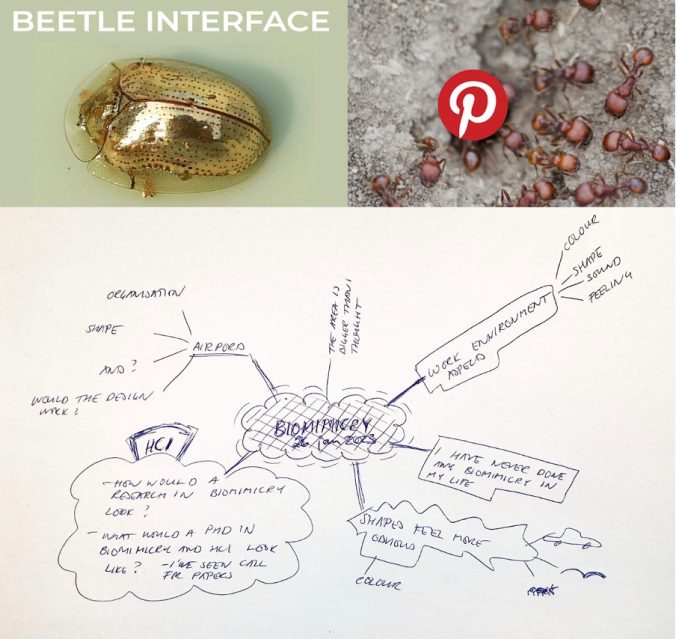
As technology continues to evolve, so do the ways people interact with it. From wearables and voice-based systems to virtual and augmented reality (VR and AR), sensors, and artificial intelligence (AI), human interaction with digital systems has transformed drastically. Simultaneously, urgent challenges affecting the health of the planet, including climate change, biodiversity loss, and inequality, has made the role of research and design in transformative change increasingly important as we pursue a sustainable, just and resilient future. These transformations push the boundaries of Human-Computer Interaction (HCI), as it necessitates the integration of the many different ways people engage with technology. Biomimicry, or biometrics, the practice of emulating forms, functions, and systems found in nature (Vincent et al., 2006), offers a unique approach to designing HCI systems that are intuitive, regenerative, and sustainable.
Why Biomimicry for HCI?
Biomimicry invites HCI researchers and designers to rethink interactions with technologies. Beyond inspiring new design aesthetics, biomimicry offers insights into designing systems that process data intuitively, sends and receives signals, respond dynamically, and adapt as living organisms do within their ecosystems. By applying design principles abstracted from nature, HCI researchers and designers can create systems that are more adaptable, environmentally responsive, and seamlessly integrated with users’ surroundings. When we incorporate these adaptive strategies into HCI, we can create interfaces that are more intuitive and efficient, using fewer resources and contributing to a regenerative approach to technology. Nature is a network of adaptive interfaces that continuously sense, process, and respond to environmental signals. Imagine if our digital systems could similarly evolve and adapt based on changes in their environment.
Workshop Highlights: Exploring Nature’s Blueprint for HCI
At two recent “Biomimicry for HCI” workshops at Uppsala University, participants delved into nature’s models of sensing, processing, and adapting to information, discovering ways to inspire “living” interfaces. In such interfaces, information is not merely displayed but dynamically revealed in response to environmental cues. The workshops aimed to:
Bridge biomimicry and HCI: Participants brainstormed and conceptualized interfaces inspired by natural, organic processes.
Go beyond screen-based interaction: Moving away from traditional, screen-centered designs, they considered how natural systems communicate, sense, and process data.
Design for sustainability and intuitiveness: By translating nature’s efficient, adaptive mechanisms, participants envisioned HCI systems that are integrated within their environments, where users interact with a system that feels responsive and organically integrated.
Conclusion: Toward a Biomimicry-Inspired HCI
The workshops offered new perspectives on designing HCI systems that emulate models found in nature. By emulating nature’s strategies for adaptation and sustainability, we can create HCI systems that are not only intuitive but also deeply integrated with their environments. This reframing encourages researchers and designers to approach interfaces as living entities that, like natural systems, process and adapt to sensory data fluidly, responding to users as ecosystems respond to environmental cues. Nature does more than aesthetically inspire, it offers models for creating HCI frameworks where the interface itself becomes a dynamic, living system, continuously adapting to and engaging with its surroundings.
In the rapidly evolving field of HCI, biomimicry offers an approach beyond conventional screen-based interaction toward a future where interfaces breathe, respond, and co-exist in harmony with the natural world.
If you are interested in exploring ideas in biomimicry for HCI, please reach out to Karin van den Driesche at c.j.h.m.vandendriesche@uva.nl or info@kadendesign.nl. Additionally, you can download the worksheet, Biomimicry Using Shape Change in Nature, for a hands-on approach: Download Worksheet.
On 13 October 2024, a quiet Sunday, I had this incredible opportunity of organizing and leading a pre-conference NordiCHI workshop along with my colleagues Åsa Cajander, Sofia Ouhbi and Awais Ahmad focused on Design Methods in Connected Health. It was an exciting day filled with lively discussions, fresh ideas, and a lot of collaborative energy. We had a diverse group of participants, all bringing their expertise to explore how design approaches can be used and can influence the landscape of connected health. Here’s a rundown of how the day unfolded and some of the most memorable moments.
Setting the tone
We kicked off with a quick introduction and overview. We wanted to ensure that everyone felt comfortable and that we were all on the same page about the goals of the workshop. The idea was simple: explore how different design methods can be be used and influence connected health solutions, particularly in making them more human-centered and responsive to real-world challenges. As participants introduced themselves, it became clear that we had a diverse group with varied experience and expertise in the connected health field. This diversity added depth to our conversations, as everyone brought unique perspectives to the table, enriching our exploration of the challenges and opportunities in designing for connected health.
Diving Into Design Methods
The first part of the workshop revolved around several short presentations, each one offering a unique design scenario for connected health. After each presentation, we held a Q&A where the group could reflect, ask questions, and share their own thoughts. This wasn’t just a formal back-and-forth – it felt more like a natural, flowing conversation where everyone got involved. People were eager to discuss both the opportunities and the challenges of each approach.
The discussions brought up a wide range of opportunities and challenges related to designing in connected health. As a group, we identified the most important and relevant topics that resonated with the participants. From these discussions, we selected five key themes that stood out for their relevance to the ongoing work in connected health. These themes were chosen to be explored further in the next session, where participants would pair up and engage in deeper discussions during a gallery walk. This allowed for a more focused exchange of ideas and practical insights on each theme.
Interactive Reflections: The Gallery Walk
In the afternoon, we switched things up with a Gallery Walk. This was a chance for participants to physically move around in pairs, reflecting on the key themes that had emerged earlier. Participants paired up and stopped by different stations, jotting down their thoughts, questions, or even new insights on the topics that stood out to them.
This was one of the highlights for us. It was incredible to see how ideas that had been discussed briefly earlier in the day could spark deeper reflections when people had the chance to digest them in a different way. By the end, we had walls full of notes, suggestions, and thought-provoking questions that built on each other.
Bringing It All Together
The day didn’t end there! After the Gallery Walk, we spent time reflecting on how these design methods could be applied in real-world scenarios. People considered how they could integrate these insights into their own work, which led to a discussion about potential collaborations.
To keep the momentum going, we began drafting ideas for a joint research paper. By the end of the session, we had a rough outline for the paper, which will hopefully lead to future collaborations.
Wrapping Up
As we closed the workshop, we could see a sense of accomplishment among tha participants. We had discussed complex ideas, brought diverse perspectives to the table, and, most importantly, walked away with new connections and insights. The workshop was an amazing opportunity to dive deep into connected health design methods, and I’m already looking forward to where these discussions and ideas will take us next.
It’s always inspiring to see how people from different backgrounds can come together to innovate and push the boundaries of what’s possible in health care. Watch this space for updates on the collaborative paper.
As we look ahead to the future of software engineering, one thing is clear: there is an urgent need for stronger communication between software engineering (SE) and human-computer interaction (HCI) researchers. This issue was brought to the forefront during the 2030 Software Engineering Workshop, co-located with the ACM International Conference on the Foundations of Software Engineering (FSE’24), where one of the key topics was the importance of human aspects in software engineering. There is also a growing need to develop sustainable systems that are not only technically robust but also socially and environmentally sustainable. The call to bridge the gap between SE and HCI was a key theme in one of the keynote addresses at the 46th International Conference on Software Engineering (ICSE 2024), which emphasised the necessity of collaboration between these fields to achieve trustworthy AI systems by design.
Historically, SE and HCI have followed parallel paths [1], with some considering HCI a subset of software engineering, while others see it as an independent field. While software engineering tends to be functional and systematic, HCI draws from diverse areas such as psychology and ergonomics to prioritise human-centred design. This difference in focus has led to challenges in transferring knowledge between the two fields, with each speaking a different language despite working toward the same goals: creating effective, efficient, and usable software systems.
With the rise of AI, IoT, and other advanced technologies, the stakes are higher than ever. We are designing systems that increasingly touch every aspect of daily life, from healthcare to transportation to education. These systems must be trustworthy, reliable, and—most importantly—designed with the human at the center. Education plays a crucial role in addressing this gap. Today’s students are tomorrow’s software engineers, and if we want them to design systems that are both technically sound and human-centered, we need to embed human aspects into software engineering curricula. However, current frameworks like SWEBOK (Software Engineering Body of Knowledge) and curriculum recommendations consider HCI a small part of the overall software design process rather than a central theme.
Another challenge in bridging the gap between software engineering and HCI lies in the terminology each field uses. For instance, concepts like usability, user experience, and quality in use often have different meanings depending on the discipline or standard being referenced. This terminological confusion can create additional barriers to collaboration, as researchers and practitioners may believe they are discussing the same concept when, in reality, they are approaching it from different perspectives.
There are, however, promising efforts to bridge this gap. International conferences that focus on both SE and HCI, or that feature tracks dedicated to exploring the intersection of the two disciplines, are helping foster collaboration. These platforms allow academics and practitioners from both fields to share ideas, discuss challenges, and develop strategies for more integrated approaches to software design and development.
As someone who has conducted research in both fields, with a focus on requirements engineering and software quality, I’ve seen firsthand how the practical aspects of software engineering and the conceptual frameworks of HCI are complementary. Together, they broaden the perspective on challenges and opportunities, enabling the production of software that is not only functional but also provides real value to all stakeholders, including users, developers, and decision-makers.
By bridging the gap between SE and HCI, we can design solutions that meet human needs while contributing to a more sustainable, inclusive, and trustworthy digital future. The next decade offers a critical opportunity to reshape the relationship between these two fields, and in doing so, shape the future of software development for the better.
[1] Ogunyemi, A., & Lamas, D. (2014). Interplay between human-computer interaction and software engineering. In 2014 9th Iberian conference on information systems and technologies (CISTI) (pp. 1-10). IEEE.
The rapid digitalization of healthcare has created new opportunities for both patients and professionals. The ConnectMe project, a research initiative led by Uppsala University, aims to explore the potential of digital technologies in mental health care. This project focuses on the concept of Connected Mental Health and investigates how digital tools, such as video consultations, can influence the work environment for clinicians while providing flexible mental health services to patients.
Project Overview
Mental health challenges have been on the rise in Sweden, placing significant pressure on healthcare systems. In response to this growing demand, ConnectMe seeks to address the impact of telemedicine and other connected mental health solutions on the work-life flexibility of healthcare professionals, particularly in mental health contexts.
The project will explore three key areas:
Influence on Clinicians’ Work Environment: How connected mental health applications, such as video consultations, affect the daily experiences and working conditions of mental health professionals.
Comparisons Across Healthcare Contexts: Differences in the use and impact of these digital tools across various clinical settings, such as primary, secondary, and fully digital care environments.
Guidelines for Implementation: Recommendations for designing and implementing connected mental health solutions that support both flexible work environments and high-quality care for patients.
Methods and Data
To achieve these goals, the ConnectMe project will use a mixed-method approach, combining qualitative interviews with psychologists and psychiatrists, a national survey, and a Delphi study involving experts in the field. These methods will help gather insights into how different digital tools are being used, the challenges faced by healthcare professionals, and what needs to be improved to create more flexible and sustainable working conditions in mental health care.
The Importance of Flexibility
One of the driving forces behind the ConnectMe project is the need for flexibility in mental health care. Telemedicine, particularly in the form of video consultations, has been widely implemented during the COVID-19 pandemic. It offers potential benefits such as greater accessibility for patients and more flexible working conditions for clinicians. However, challenges remain, including the increased cognitive workload and stress associated with managing digital tools.
Through this project, the research team hopes to provide practical recommendations for ensuring that connected mental health tools enhance, rather than hinder, the work environment of clinicians. The findings will be used to develop guidelines that support a flexible and efficient use of digital technologies in mental healthcare.
Meet the ConnectMe Project Team
The ConnectMe project is led by a multidisciplinary team combining expertise in health informatics, software engineering, occupational health, and human-computer interaction. Together, they aim to improve flexibility in mental health care through connected technologies.
Maria Hägglund, PhD (Project Leader): An associate professor in Health Informatics, Maria specializes in digital health innovations and implementation science. She leads the project, focusing on enhancing work-life flexibility for mental health professionals.
Åsa Cajander, PhD: A professor of Human-Computer Interaction, Åsa researches the impact of digitalization on healthcare work environments, bringing crucial insights into how connected tools affect clinicians.
Charlotte Blease, PhD: An associate professor in Health Informatics and Research Affiliate at Harvard Medical School, Charlotte contributes her expertise in digital psychiatry and ethics, focusing on the real-world impact of telemedicine.
Sofia Ouhbi, PhD: An associate professor specializing in software engineering, Sofia ensures that connected health tools meet the needs of clinicians and patients, focusing on technical solutions for a flexible work environment.
Magdalena Ramstedt Stadin, PhD: A postdoctoral researcher in occupational health, Magdalena explores how digitalization affects work-related stress and well-being, particularly in mental health settings.
Future Impact
The ConnectMe project aims to provide actionable insights that can be applied in both clinical settings and digital health policy. The recommendations from this project will contribute to the broader understanding of how digital tools can shape the future of mental health care, ensuring that both patients and clinicians can benefit from a more connected and flexible healthcare system.
As the project continues over the next three years, we will share more updates and findings that can inform the future design and implementation of digital mental health solutions.
For more information about the project: https://connectme.blog.uu.se/about-connectme/
In our research group, we study the relationships and dynamics of Human, Technology, and Organisation (HTO) to create knowledge that supports sustainable development and utilization of ICT.